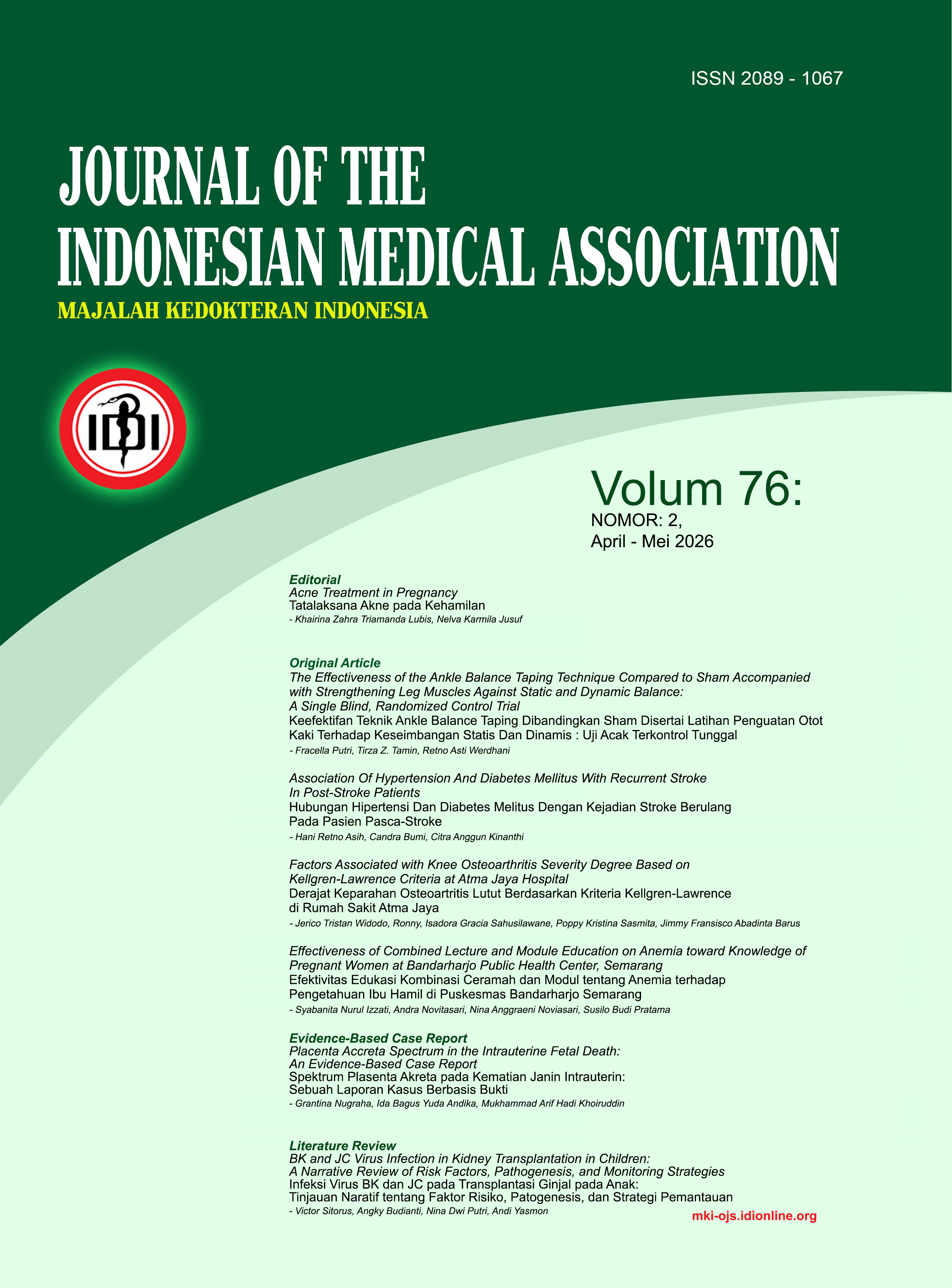
Effectiveness of Combined Lecture and Module Education on Anemia toward Knowledge of Pregnant Women at Bandarharjo Public Health Center, Semarang
Abstract
Introduction: Anemia in pregnancy remains a significant public health challenge in Indonesia. Educational intervention serves as a primary strategy to enhance health literacy among pregnant women. This study aimed to evaluate the effectiveness of a combined lecture and module educational intervention on anemia knowledge among
pregnant women at Bandarharjo Primary Health Center, Semarang.
Methods: This quantitative study employed a pre-experimental one-group pretest– posttest design without a control group involving 32 pregnant women selected through total sampling. The intervention was delivered in a single 60-minute session comprising an LCD-assisted lecture, guided module reading, and an interactive Q&A discussion. Knowledge was measured using a 30-item Guttman scale questionnaire validated for accuracy (r greater than 0.361) and reliability (α = 0.935). Pretest and posttest score differences were analyzed using the Wilcoxon signed-rank test.
Results: A significant increase in mean knowledge scores was observed, rising from 20.0 ± 4.123 to 28.7 ± 1.857 (p = 0.000). On the posttest, all respondents (100%) reached the Good knowledge category. This outcome was supported by the high educational background of respondents (53.1% high school and 31.3% higher education) and suggested a potential ceiling effect of the instrument.
Conclusion: Combined lecture and module education is effective in improving pregnant women’s knowledge about anemia. Nevertheless, findings should be interpreted with caution due to the uncontrolled design, potential ceiling effect, and respondent educational characteristics.
Downloads
 Viewer: 149 times
 PDF (Bahasa Indonesia) downloaded: 108 times